

Rapé FAQ
La Herba · Collection guide
Origin, ingredients, choosing a blend and important context in one place.
Rapé has an origin, a context and a character. This guide helps you explore the collection with more clarity.
In this guide
Getting started
The essentials
What is Rapé / Hapé?
Rapé is a traditional powdered preparation crafted by indigenous communities of the Amazon basin, primarily in Brazil, Peru and Colombia. It belongs to cultural and ceremonial traditions of the region.
Does Rapé go by other names?
You may also see it written as rapeh, hapé, hapeh or ruma. The spelling depends on the community, language and transliteration used.
Who makes Rapé?
Rapé is often prepared by experienced members of indigenous communities. In some traditions this includes men, Pajés or elders; there are also exceptions, such as Força Feminina blends created by women of the Yawanawá community.
Choosing a blend
How to choose Rapé
Why do some blends feel more pronounced than others?
The character of a blend can vary with its ingredients, type of ash, fineness of the powder, freshness and overall strength. A stronger blend is not better or worse – it simply has a more pronounced character.
How do I choose Rapé for the first time?
Read the product description and consider the blend’s origin, ingredients and overall character. Product tags are there to help you compare blends, not to promise a specific result.
What do product labels mean?
Tags such as Grounding, Ceremonial, Heart or Cleansing describe a traditional character or intention associated with a blend. They are not medical claims or guarantees of a specific effect. See also Rapé intentions.
Origin and ingredients
How a blend is made
How is Rapé prepared?
Traditional preparation involves drying, fine grinding and repeated sifting of selected plant materials and ash from wood or tree bark. The result is a very fine powder. It is demanding handwork that can take several days.
What is Rapé made of?
Many traditional blends are based on Mapacho. It can be combined with ash from trees such as Tsunu, Murici, Cumaru, Caneleiro, Pau Pereira or Mulungu. Recipes may also include other plant materials, herbs or seeds.
Does all Rapé contain Mapacho?
No. Many traditional blends contain Mapacho, but there are also Mapacho-free preparations. Ingredients always depend on the individual blend and its maker.
Important information
Use and storage
Are there risks associated with Rapé?
Yes. Rapé is not suitable for everyone, and the experience may not always be comfortable. Burning in the nose, watery eyes, sneezing, nausea or headache may occur. If someone feels unwell, it is advisable to stop. Many blends contain Mapacho and, with it, nicotine. Rapé containing Mapacho is not recommended during pregnancy or breastfeeding. Those with a medical condition, taking medication or unsure whether use is appropriate should consult a qualified healthcare professional.
Is Rapé addictive?
Many Rapé blends contain Mapacho and, with it, nicotine. Nicotine can lead to dependence, so it is important to be mindful of one’s own relationship with use and to avoid approaching it mechanically or compulsively.
Will Rapé appear in a drug test?
Standard tests focused on illegal substances do not usually test for nicotine, but testing panels vary.
How long does Rapé stay fresh?
When kept in a tightly sealed container in a dry, dark and cool place, a quality blend can retain its aroma and character for several months.
Cultural context
Traditions and meanings
What is the traditional purpose of Rapé?
In different Amazonian traditions, Rapé is used in ceremonial and cultural settings. It may be associated with focus, grounding, prayer, intention and quiet reflection.
What does Panema mean?
Panema is a concept from Amazonian traditions. It can describe spiritual stagnation, heaviness or unfavourable energy as understood by certain communities. In this cultural context, Rapé may be associated with the symbolic clearing of Panema.
What are Kuripe and Tepi?
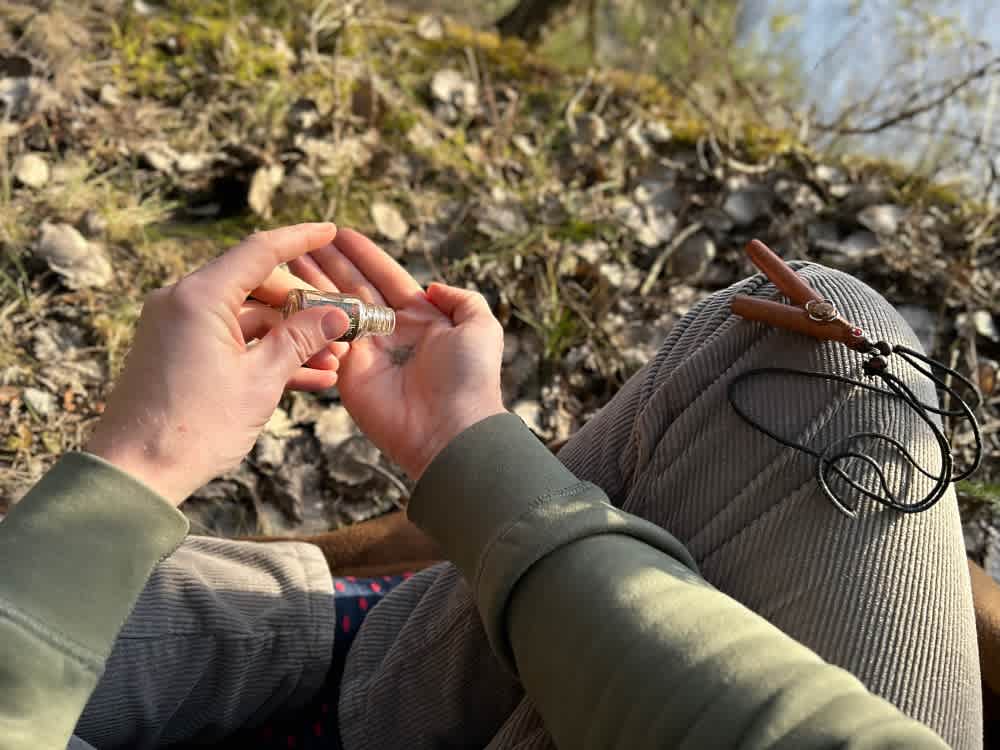
Kuripe is a small V-shaped blowpipe traditionally associated with self-application, while Tepi is a longer straight blowpipe traditionally used when Rapé is offered to another person in a ceremonial context. See our Kuripe and Tepi collections and the guide Ways to blow Rapé.
Why do people say “Haux Haux”?
Haux Haux is an expression used in some Amazonian communities, including Huni Kuin and Yawanawá. It can express respect, affirmation, gratitude or intention in a ceremonial context. Its meaning may vary by community and situation.
Would you like to learn more about the origins and traditions of Rapé?
What is Rapé?How Rapé is usedRapé collectionHaux e muita alegria!
Do you have a question?
Write to us and we will be happy to help.
Contact La HerbaHaux e muita alegria!
Mulungu (Erythrina mulungu) – tradiční využití, účinky a výzkum

Erythrina mulungu, známá jednoduše jako Mulungu, je středně velký strom z čeledi bobovitých (Fabaceae), který dorůstá přibližně 10 až 15 metrů. Přirozeně roste především v Brazílii a da...
Shawãndawa (Arara) kmen

Svět je zná jako Arara, oni sami se nazývají Shawãdawa. Národ z horního Juruá v brazilském Acre, známý svou otevřeností a štědrostí – a mýtem, podle kterého všechny národy Pano vzešly z peř...
Pralesní škola a indiánské tradice – Agustin Allpa Grefa

O tradičním způsobu indiánského vzdělávání, které děti opětovně propojuje s přírodou a moudrostí předků. Jedním z největších traumat dnešní doby je odpojení se od sebe sama a neznalos...
Palo Santo: posvátné dřevěné vykuřovadlo z Peru

V posledních letech se Palo Santo stalo synonymem pro rituální očištění prostoru a meditační rituály po celém světě. Tento posvátný dřevěný produkt, který pochází z Jižní Ameriky, je ob...

