

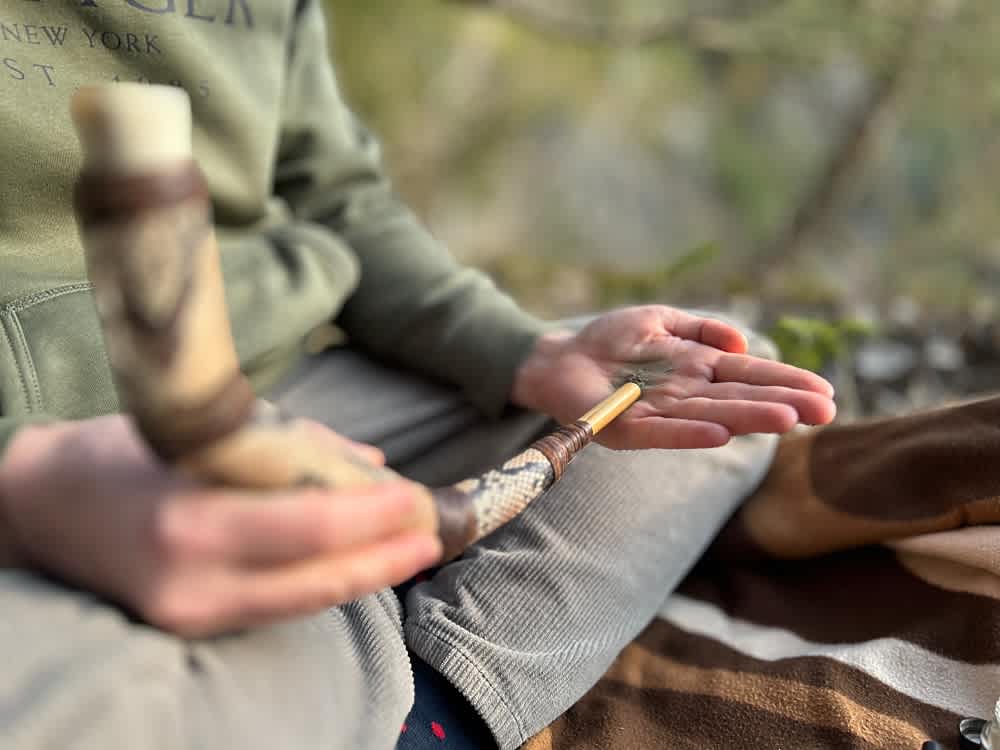
Rapé Intentions, Effects & Types Explained
Most Rapé falls loosely into seven families, and they map onto how the tradition itself talks about it. The lines aren’t rigid — blend, setting and intention shape everything — but the grouping helps when you’re choosing. Read it as how practitioners describe each type, not as a promise of what it will do for you.
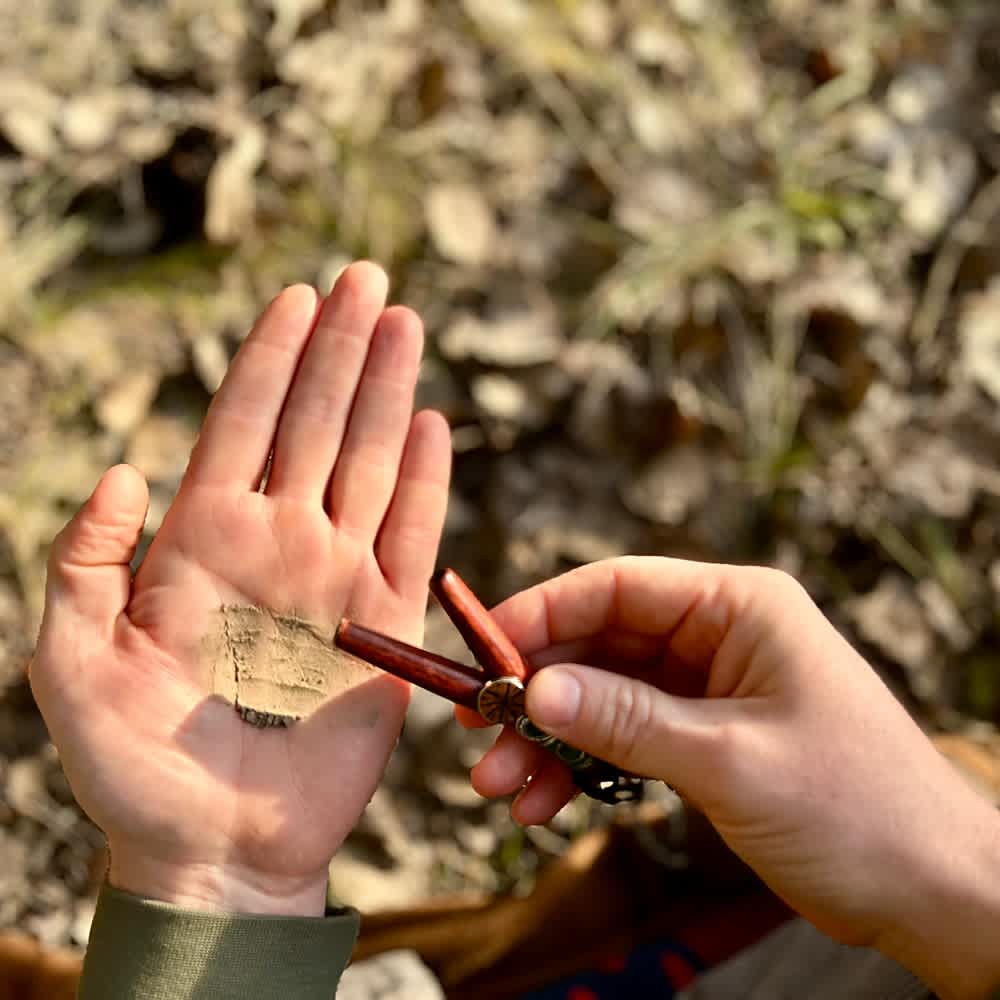
Grounding (fortifying) Rapé: energy, focus
The everyday family — soft blends, often built on light Tsunu or Murici ash. Practitioners reach for these for a quick sense of mental clarity and present-moment focus, a settling of mental noise rather than anything dramatic. Most people describe a brief nasal tingling and a subtle lift in alertness, commonly attributed to nicotine crossing the nasal mucosa. This is where most newcomers start.
Typical blends
Ceremonial (spiritual) Rapé: spiritual, visions
The communal family — the Rapé that belongs to prayer, song and gathering rather than to a quiet morning alone. In the western Amazon these blends accompany uni (Ayahuasca) and mariri (ceremonial song), and practitioners describe a grounded sense of connection: to themselves, to the circle around them, and to ancestral lineage. In communal settings Rapé carries the passing-on of teachings as much as anything else.
Typical blends
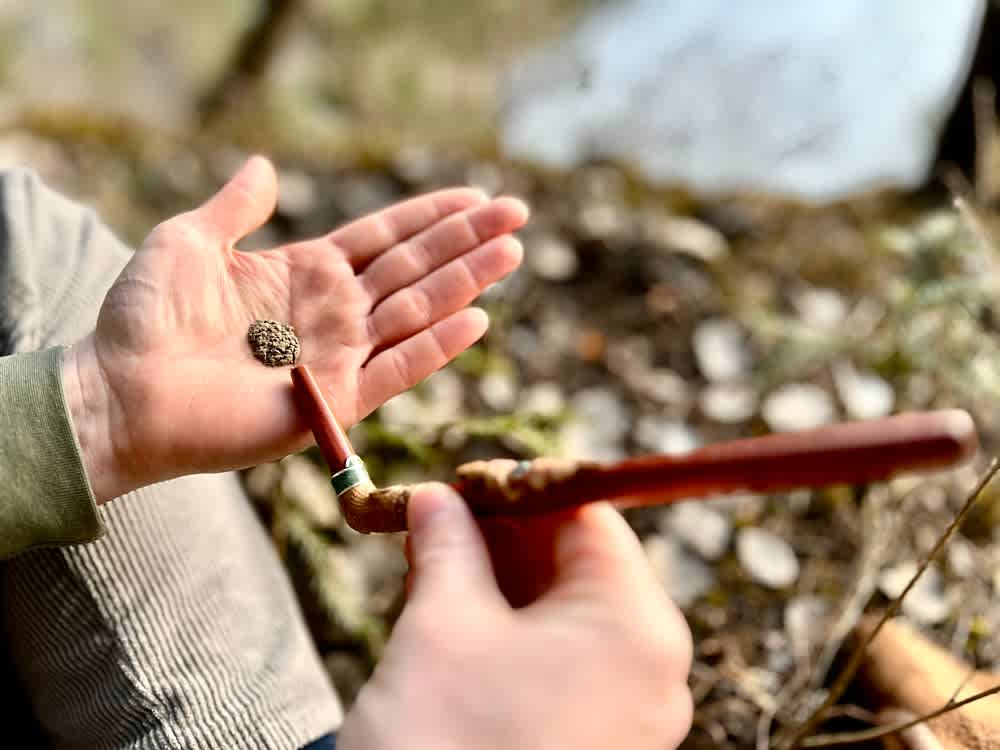
Cleansing (healing) Rapé: healing, emotional balance
The stronger, more direct family — often plain tobacco-and-ash blends. These are the ones the tradition ties to tirar a panema, “clearing the heaviness.” In ceremonial use, sweating or watering eyes may follow; in Brazilian traditions that’s understood as part of the cleansing rather than as a side effect. Many practitioners describe an emotional “reset” afterwards — a sigh, sometimes tears, a sense of catharsis — particularly where there’s space to sit with it.
Typical blends
Heart-opening Rapé
A gentler, more aromatic family — most associated with the Cacau blend, where roasted cacao is worked in with the tobacco and ash. Practitioners describe these as warm and softening rather than activating, and they’re often chosen for quiet, introspective sittings rather than intense ceremony.
The natural companion here is a Ceremonial Cacao practice — the two share the same unhurried, heart-led character, which is why people tend to pair them.
Typical blends
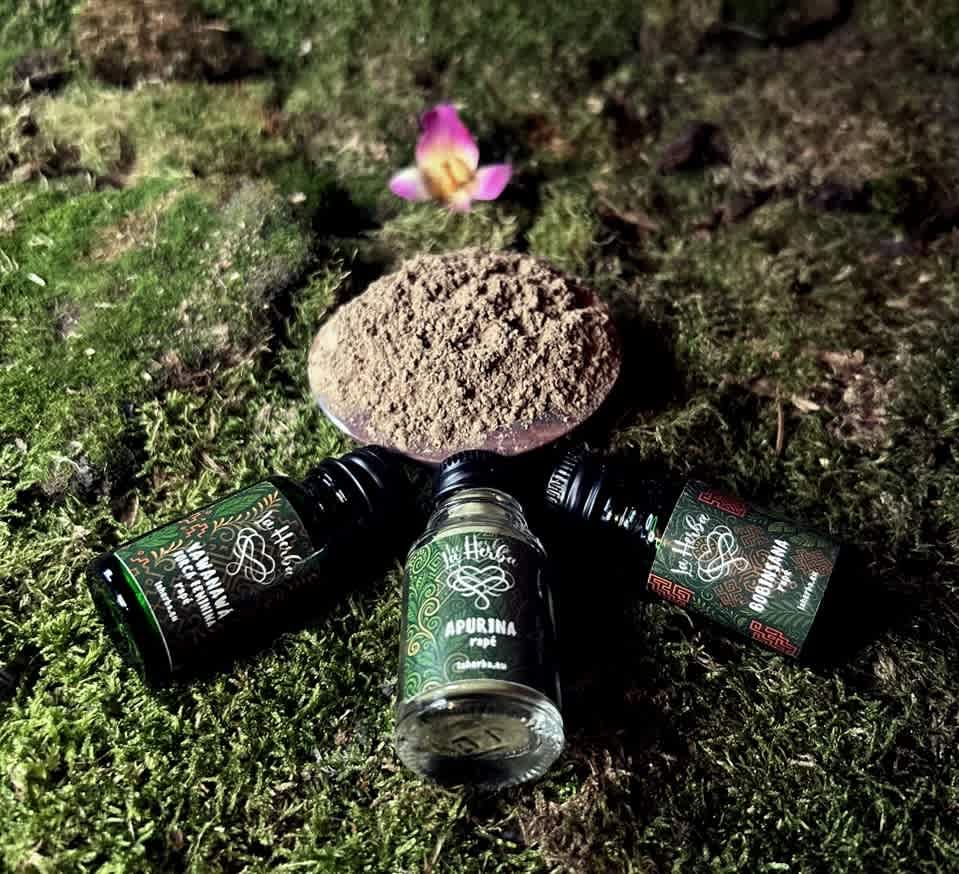
Dreamwork Rapé
A smaller, more specialised group, tied to dreaming and night practice. The blend most associated with it is Apurinã Awiry — a green snuff the Apurinã prepare entirely from a wild plant, with no tobacco and no ash. In the tradition these blends are spoken of as belonging to the threshold between waking and sleep — set down with intention before rest rather than reached for in daytime.
Typical blends
Protection Rapé
In Amazonian shamanism, holding a firm energetic boundary is treated as seriously as cleansing. Where cleansing clears heaviness that’s already settled, protection blends are spoken of as a shield against taking it on in the first place — useful, in the tradition, for those working in dense or draining environments. These tend to be denser, more grounding blends, often built on resilient hardwood ashes such as Cumaru (the “ironwood” of the Amazon).
Typical blends
Warrior Energy Rapé
The opposite end from grounding. Where the grounding family settles and quiets, the warrior blends are the ones tribes traditionally reached for before a hunt or hard physical work — sharp, activating, made to wake the body and lift sluggish energy. These are typically strong, high-tobacco blends, and squarely experienced-practitioner territory rather than a first step.
Typical blends
Browse all families in our Rapé collection.
Haux e muita alegria <3
Disclaimer – ethnobotanical sample
This natural product is offered exclusively as an ethnobotanical sample for ethnographic, historical, cultural, educational, and research purposes. It is not intended for ingestion, inhalation, smoking, or any form of internal or medicinal use. Handling and use are entirely the responsibility of the purchaser. Further details can be found in our Disclaimer.
Chilcuague – Aztécký Zlatý Kořen

Existuje kořen, který nejdřív nic neřekne. Pak se na jazyku objeví jemné mravenčení, které se šíří a překvapí i toho, kdo o něm už slyšel. Tak se v horách střední Mexika setkávají lidé...
Mulungu (Erythrina mulungu) – tradiční využití, účinky a výzkum

Erythrina mulungu, známá jednoduše jako Mulungu, je středně velký strom z čeledi bobovitých (Fabaceae), který dorůstá přibližně 10 až 15 metrů. Přirozeně roste především v Brazílii a da...
Katukina (Noke Koi) kmen

Vnější svět je zná jako Katukina. Oni sami se nazývají Noke Koi – „praví lidé“. Národ, který si navzdory více než stoletému tlaku zvenčí uchoval jazyk, klany i tradiční medicíny.
Na pomez...
Pixuri (Licaria puchury) strom

Licaria puchury – major z rodiny Lauraceae. Z tohoto stromu se využívají zejména jeho velká tmavá semena a listy. Semena...

